Jan 4, 2009

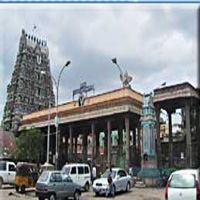
Parthasarathy Temple


To add some variety to your temple journey visit the Parthasarathy temple in Chennai. Though the common features of ancient temples are very much prevalent in this ancestral temple but it has some striking features, which makes the temple outstanding among others.

Journey to the Parthasarathy temple in Madras is very easy as it is situated in the heart of the Chennai city. Madras is the earlier name of the present Chennai city. Parthasarathy temple is in the Peter's Road, which is at Triplicane. You can visit this temple either by bus or auto rickshaw or by hired luxurious cabs. If you are going by auto rickshaw be careful about the fares. The standard charge for the auto rickshaws Rs. 8 for every kilometre you travel. Even if it is metered it is better to negotiate the fare first. The same concept applies for the luxurious cabs.

The Parthasarathy temple in Chennai has its origin back in 8th century. It was generally built by the Pallavas and later reformed by the Vijayanagar Kings during 11th century. The literal meaning of 'Parthasarathy' is the charioteer. According to the great Indian epic 'Mahabharata' 'Partha' meant Arjuna while sarathy is meant as charioteer. In the epic it is said during the great battle of Mahabharata Lord Krishna was the charioteer of Arjuna. In the epic Arjuna or partha was a brave warrior and Lord Krishna was a good friend, philosopher and guide to the Partha or Arjuna.

Though the Parthasarathy temple is devoted to the various incarnations of Lord Vishnu the main deity is 'Lord Krishna' one of the incarnation of Lord Vishnu. Also the other exquisite feature of this Parthasarathy temple is the colored gopuram. 'Gopuram' is said to the pyramidical shaped temple top which is a stereotyped feature of the South Indian temples.

Jan 3, 2009

Tiruvannamalai temple


City: Tiruvannamalai
State: Tamil Nadu
Location: South India
Type of Building: Temple
Dedicated To: Lord Shiva
Religion: Hinduism
Accommodation: Accommodations are available at Thiruvanamallai.
Accessibility: Thiruvanamallai is connected to the other cities by road.

Temple is an externalized aspect of faith, and it is a place to restore peace and harmony. What great seers have visualized has been made outwardly real in a temple. This temple is safely edifice consecrated to the Lord of Light and other deities, built centuries ago at the foot of the hill to form the seat of worship. The main entrance to the sanctum sanctorum is in the eastern tower, the tallest structure in proportion to the other dimensions of this largest temple forming part of it. The tower rising heavenward is marvellously massive and magnificently majestic one with its imposing structural elegance and inviting architectural excellence and awes people at a distance.
Temple is the world's only social hope and the sole promise of peace and harmony; it purifies the society, and looks at the world with the intention of serving it, and strengthening society spiritually uniting people. The temple stands for the eternal, and the great glory of god where people praise the name of god and sing his glory. The temple offers you something you simply cannot get else where.
Daily Poojas at Temple
05.30 AM Ushathkalam
08.00 AM Kalasanthi
10.00 AM Uchikalam
06.00 PM Sayarakshai
08.00 PM IrandamKalam
09.30 PM Artha Jamam

Thanjavur big temple


City: Thanjavur
State: Tamil Nadu
Location: South India
Year of Construction 1003 and 1010 A.D.
Constructed By Raja Raja Cholan
Type of Construction Ancient
Type of Building Temple
Religion Hinduism
Best Time Winter
Visit Timings 9 a.m to 1. p.m, 2.p.m. to 6.p.m.
Entry Formalities Ticket Rs.3
Accessibility: Thanjavur is accessible by road and train from most cities of Tamil Nadu, which includes of course Madras. Trichy has an airport with flights from Madras and Colombo (Sri Lanka), and is also an important railhead. Gangaikondacholapuram is 71 kilometres from Thanjavur. The city of Kumbakonam is 40 kilometres from Thanjavur and a further five kilometres brings you to Darasuram.

Templenet focuses this week on the glorious temples attributed to the reign of Raja Raja Chola and his successors in the Thanjavur Cauvery belt of South India.

Historically speaking, these temples are not as ancient as the 274 odd Saivite temples and the 108 Vaishnavite Shrines sung by the Nayanmars and Alwars of the 7th through the 9th centuries; however they stand out as towering monuments proclaiming the glory of the Chola regime and its committment to the arts and culture.

The districts of Thanjavur, Kumbhakonam and Nagappattinam (constituting the erstwhile Thanjauvr district) boast of hundreds of ancient temples. The town of Thanjavur was the seat of the glorious Chola Empire of Tamilnadu, and was later on the seat of the Nayaks and the Marathas. True to art historian Fergusson, the Chola artists conceived like giants and finished like jewellers.

Dec 27, 2008

Rameshwaram temple


City: Rameshwaram
State: Tamil Nadu
Location: South India
Year of Construction: 17th Century
Type of Construction: Ancient
Type of Building: Temple
Dedicated To: Lord Shiva
Religion: Hinduism
Importance: According to the Hindu mythology i.e. the story of Ramayana Lord Rama performed thanksgiving rituals to Lord Shiva after the battle at Sri Lanka and his triumph over the demon king Ravana. Owing to this Rameshwaram attracts Vaishnavites (worshippers of Lord Vishnu) and Saivites (worshippers of Lord Shiva) alike.
Famous For: The Linga of Sri Ranganatha, A Pilgrimage To Kashi Is Not Considered Complete Without A Pilgrimage To Rameshwaram.
Accommodation: Accommodation is available at the moderate and economy class hotels, devasthanam cottages and choultries in Rameshwaram.
Accessibility: The nearest airport is at Madurai, at a distance of 154-km. Rameshwaram is well connected by trains from all the major cities of India. State transport buses are available from the railway station to the various places in and around Rameshwaram. For local transportation taxis, auto-rickshaws, cycle-rickshaws and tongas are available. Also city bus service is available in the island.

Madurai Meenakshi Temple


City: Madurai
State: Tamil Nadu
Location: South India
Year of Construction: 16th to the 18th Century
Constructed By: The Pandyan King, Kulasekhara
Type of Construction: Ancient
Type of Building: Temple
Dedicated To: Lord Shiva
Other Deities: Goddess Meenakshi
Religion: Hinduism
Importance: According to legend Madurai is the actual site where the wedding between Shiva and Meenakshi took place.
Festival: Meenakshi Kalyanam in April-May and the Teppam Festival
Best Time: April-May
Accommodation: There are several reasonably priced clean places to stay in along Town Hall Road and Dindigul Road. The bigger hotels, and there are some pretty good national chains which have deluxe hotels here, are across the Vaigai River to its northern side.
Accessibility: Madurai is connected by air with Mumbai and Chennai. Madurai airport is 10-km away from the city. Madurai has direct rail connections to Bangalore, Coimbatore, Kollam, Chennai, Rameshwaram, Thanjavur, Tiruchirappalli, Tirunelveli, Tirupathi and Tuticorin. There are excellent roads connecting Madurai to all parts of South India. Madurai city has 5 Major Bus Stands- Periyar Bus Stand, Anna Bus Stand, Palanganatham Bus Stand, Arapalayam Bus Stand, and Mattuthavani Bus Stand. From Madurai town buses, suburban buses, taxis, auto rickshaws and cycle rickshaws are available to reach the temple.

Mahabalipuram temples


City: Mahabalipuram
State: Tamil Nadu
Location: South India
Year of Construction: 830 - 1100 AD.
Constructed By: Pallava Dynasty
Type of Construction: Ancient
Type of Building: Temple
Dedicated To: Lord Shiva
Other Deities: Vaishnava
Religion Hinduism

About Mahabalipuram:
The history of Mahabalipuram dates back to two thousand years, it contains nearly forty monuments of different types including an "open air bas relief" which is the largest in the world, for centuries it has been a centre of pilgrimage, it figures in the early annals of the British search for the picturesque in India in the 18th century, today it attracts shoals of foreigners in search of relaxation and sea bathing, and most strange of all, it has an atomic power plant for neighbour. A small library has been written on it. Over its history and that of its monuments a number of scholarly controversies rage.

The proper name of the site is "Mamallapuram", after Mamalla, an honorific of the Pallava king, Narasimha Varman I (630-668), who created the earliest of its monuments. But it is popularly called "Mahabalipuram", or "The city of Bali", whom Lord Vishnu chastised for his pride and of whom there is a relief in one of the excavated temples here.

Temples in Mahabalipuram:
There are, or rather were, two low hills in Mahabalipuram, about 400m from the sea. In the larger one, on both sides, there are eleven excavated temples, called Mandapas, two "open air bas reliefs"; one of which is unfinished, and a third enclosed one. Out of a big rock standing free nearby there is a "cut out" temple, called a "Ratha". This type is unique to Mahabalipuram.

Out of the other hill, much smaller and standing about 200m to the south, are fashioned five more rathas, and three big sculptures of a Nandi, a Loin and an Elephant. On the top of the bigger hill there is a structural temple, and a little distance the magnificent beginnings of a Vijayanagar Gopura and also survivals of what is believed to be a palace.

Kanchipuram temple


Welcome to the city of thousand temples. Kanchipuram district is situated on the north-eastern coast of Tamil Nadu, adjacent to the Bay of Bengal and Chennai city. It is bounded in the west by Vellore and Thiruvannamalai district, in the north by Thiruvallur district and Chennai district, in the south by Villupuram district, in the east by Bay of Bengal. It lies between 11° 00' to 12° 00' North latitudes and 77° 28' to 78° 50' East longitudes. The district has a total geographical area of 4, 43,210 hectares and coastline of 57 Kms.

Kanchipuram, the temple town is the district headquarters. For administrative reasons, the district has been divided into 3 revenue divisions comprising of 8 taluks with 1214 revenue villages. For development reasons, it is divided into 13 development blocks with 648 Village Panchayats.

Kanchipuram was the historical capital of the Pallavas during the 7th - 9th centuries. Kanchipuram is one of the seven sacred cities of India. Kanchipuram is famous for hand-woven silk fabrics and saris. The weavers use the highest quality silk and pure gold thread. Kanchipuram is also known as Silk City. Sankaracharya 'Math' is situated at Kanchipuram.

City: Chennai
State: Tamil Nadu
Location: South India
Altitude Year of Construction: Around 6th and 7th Century
Type of Construction: Ancient
Type of Building: Temple
Religion: Hinduism

Festival: Brahmotsavam -Varadaraja Temple In May; Garuda Sevai- Varadaraja Temple In June; Float Festival -Varadaraja Temple In February And November; Kamakshi Ammam Festival - February; Mahashivaratri Festival - Kailashanatha Temple In February; Panguni Uthiram -Ekambareshwara Temple In March-April.

Accessibility: Chennai is the nearest airport to Kanchipuram. Trains for Kanchipuram are available from Chennai, Chengalpattu, Tirupati, and Bangalore. Kanchipuram is 75-km away from Chennai and is well connected by a network of roads. There are frequent buses from the city to Chennai, Bangalore and other places. For local transportation bicycles can be hired from the shops near the bus stand. Cycle Rickshaws and auto rickshaws are also available on hire to move in and around the city.